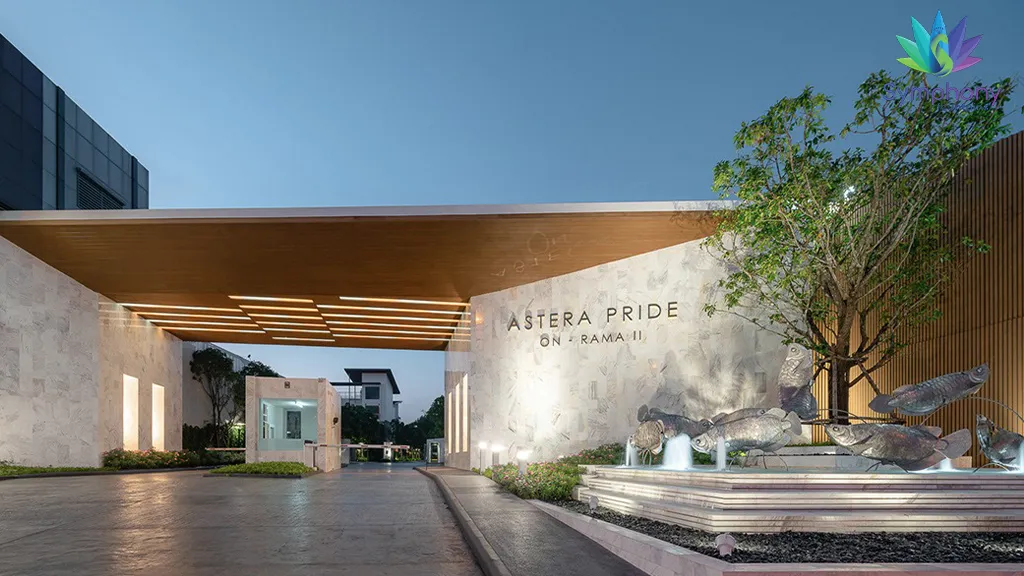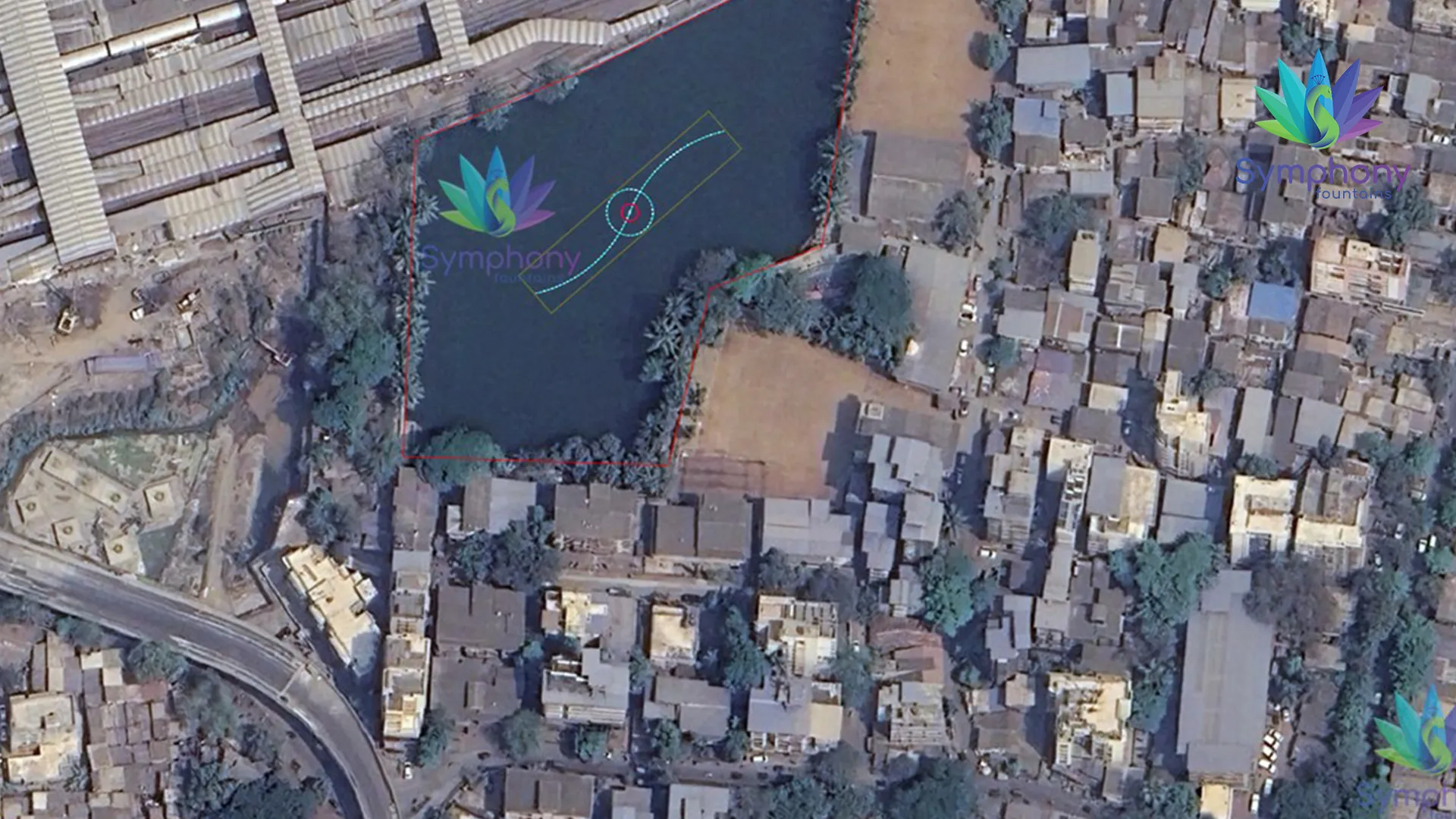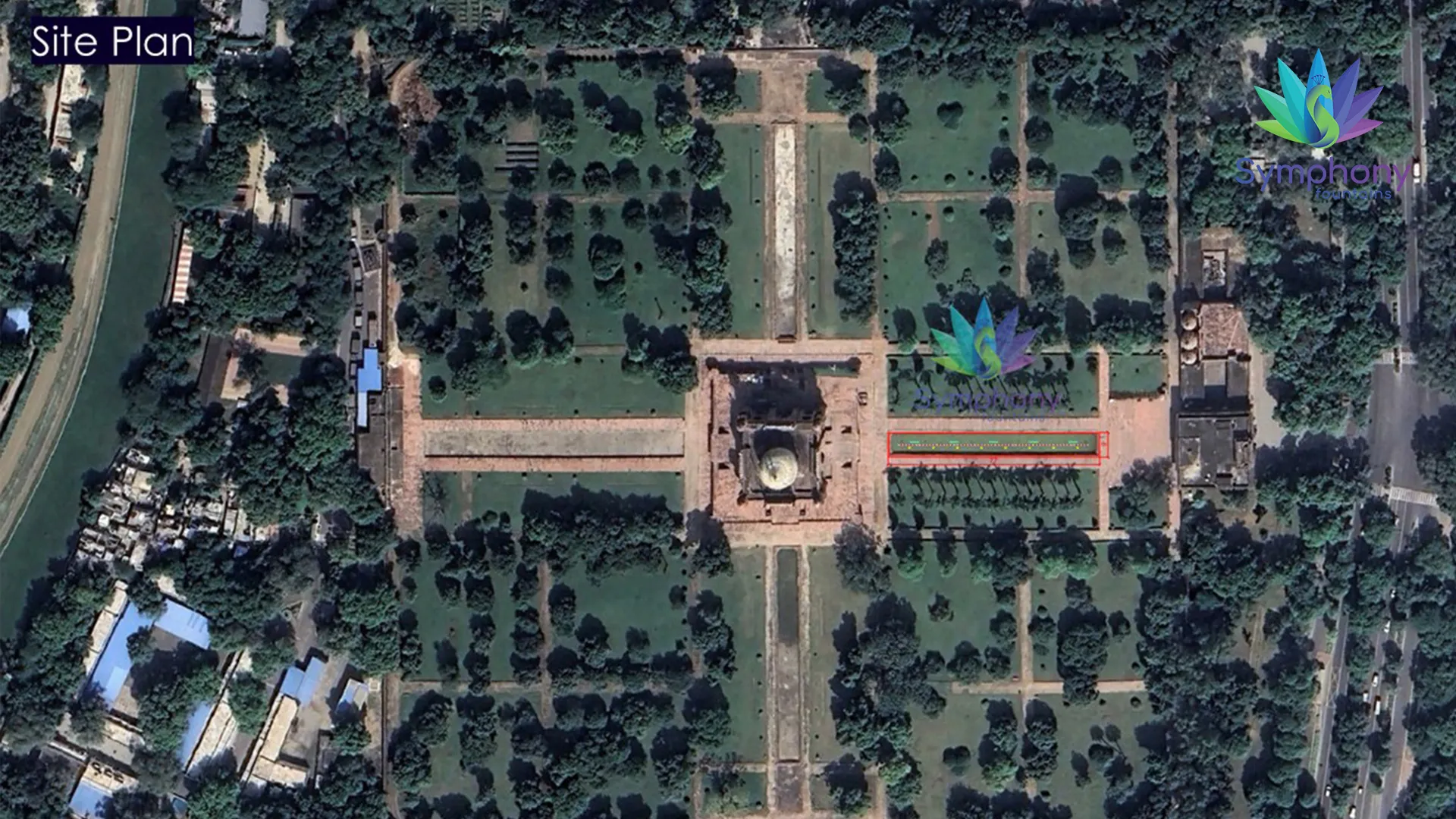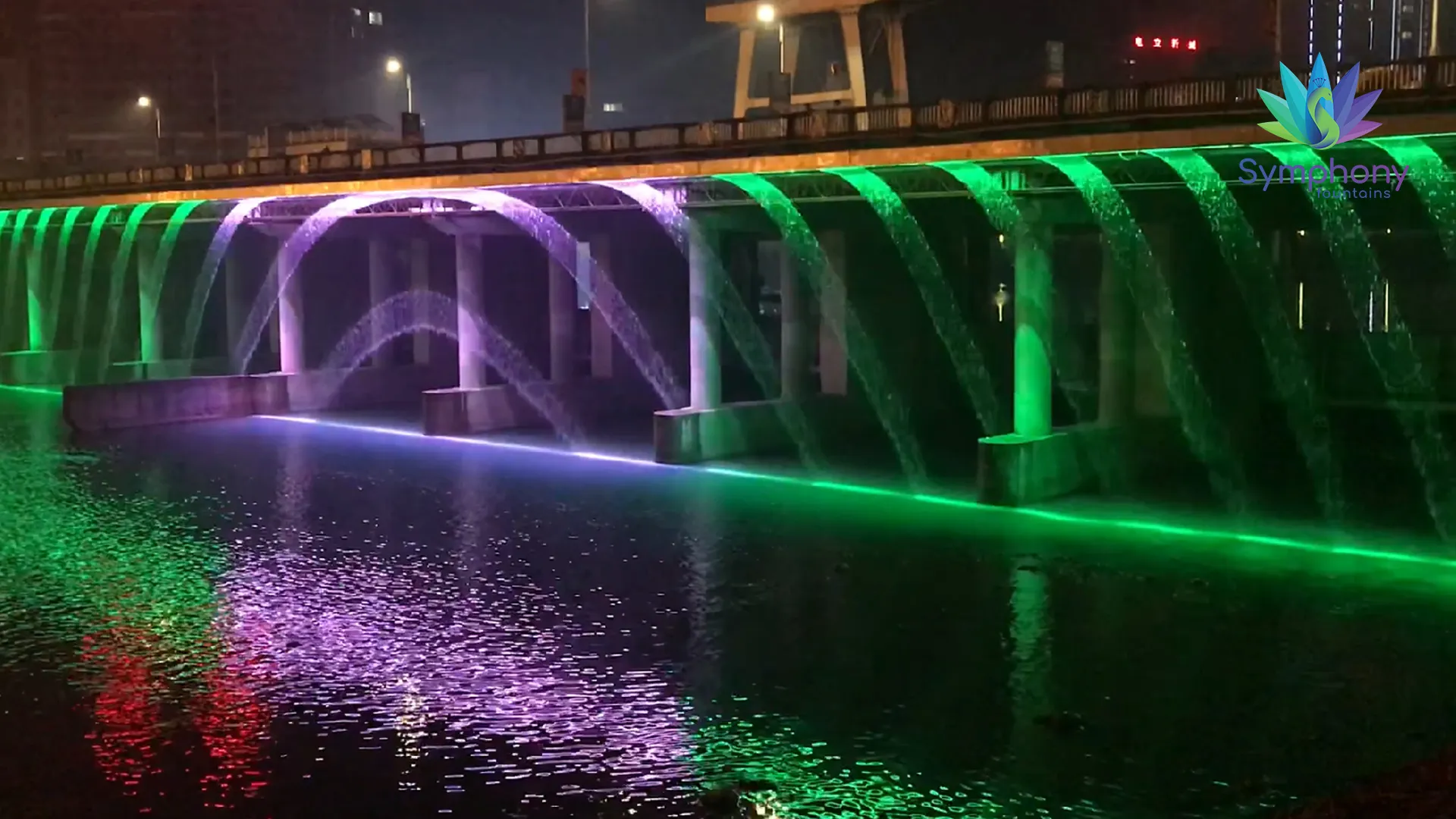

Symphony Fountains installs fixed basin fountains, floating fountains, and dry deck fountain systems using our own specialist installation teams. Our installation service covers the complete scope of fountain system installation from civil coordination and hydraulic system fitting through to underwater lighting installation, electrical and control panel connection, system commissioning, and performance verification. We install the fountain systems we manufacture and supply, ensuring complete continuity between the design, manufacturing, and installation phases of every project.
Fountain installation is not a general plumbing or electrical task. It requires specialist knowledge of hydraulic system assembly, underwater electrical installation, nozzle calibration, pump commissioning, variable frequency drive setup, DMX lighting system commissioning, and show control system configuration. Errors at the installation stage, including incorrect pipe connections, improperly balanced hydraulic circuits, poorly sealed underwater fittings, and misconfigured control systems, directly affect the fountain’s performance quality and long-term reliability. Symphony Fountains’ installation teams are trained specifically for fountain installation and bring project-specific knowledge because they work from the layout drawings and manufacturing documentation produced by our own design and manufacturing teams.
Fountain installation is the process of assembling, connecting, and commissioning all mechanical, hydraulic, electrical, and control components of a fountain system within the civil infrastructure prepared by the site’s civil contractor. It begins when the civil works are structurally complete and the basin, vault, conduits, and power supply are ready, and it ends when the complete fountain system has been commissioned, performance-tested, and handed over to the operating team.
A complete fountain installation involves four distinct technical workstreams that must be executed in the correct sequence and coordinated carefully to avoid conflicts and rework. The hydraulic installation involves assembling and connecting the pipe network, nozzle headers, pumps, and valves within the basin and pump room. The underwater electrical installation involves mounting and connecting the LED lighting fixtures within the basin and routing their cables to the control panel. The above-water electrical installation involves connecting the control panel to the power supply, the pumps, the lighting system, and the audio equipment. The commissioning phase involves filling the basin, testing the hydraulic system, calibrating pump speeds and nozzle flow rates, programming the lighting system, testing the audio system, and running the complete fountain through its show sequences to verify performance against the design specification.
Each fountain type has specific installation requirements that differ from the others. Fixed basin fountains require careful hydraulic assembly within the basin structure and precise nozzle positioning relative to the waterline. Floating fountains require platform deployment onto the water body, mooring system installation, and electrical cable management across the water surface. Dry deck fountains require precise nozzle sleeve installation flush with the paving surface, underground collection tank commissioning, and sensor system setup for interactive installations. Symphony Fountains’ installation teams are experienced in all three installation types.
Symphony Fountains provides installation services for three fountain system types. Each has distinct technical requirements and installation procedures.
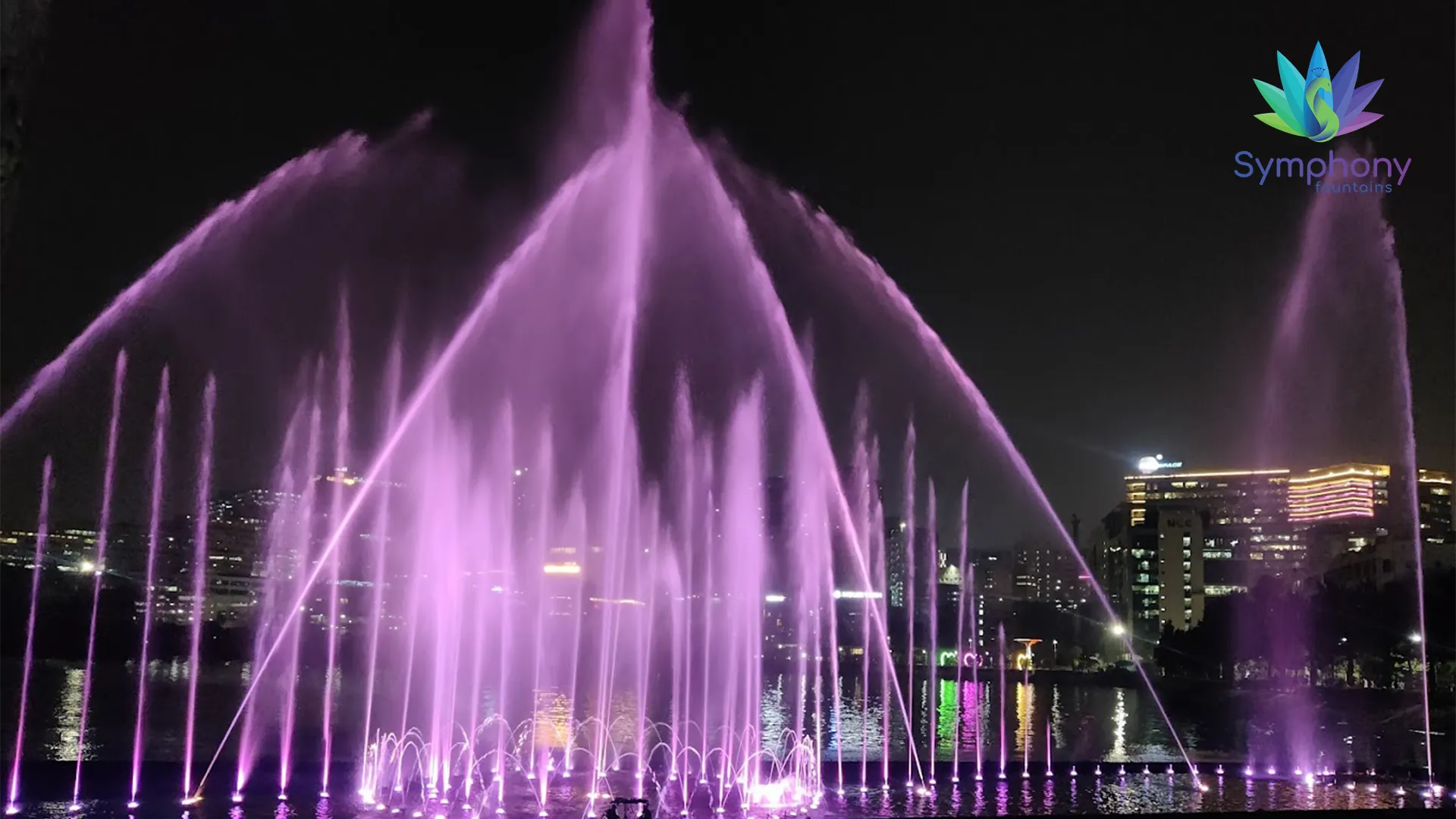
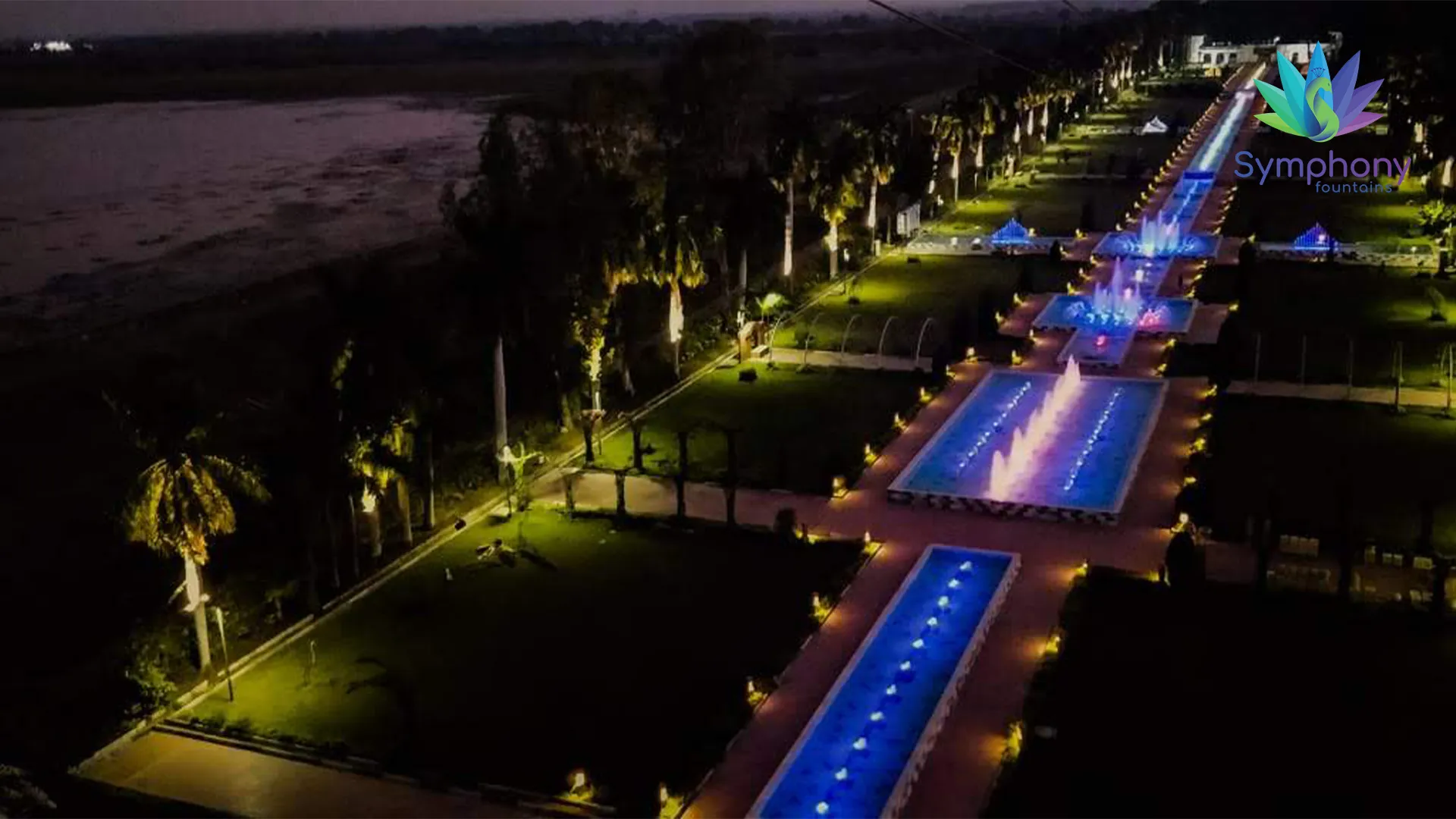
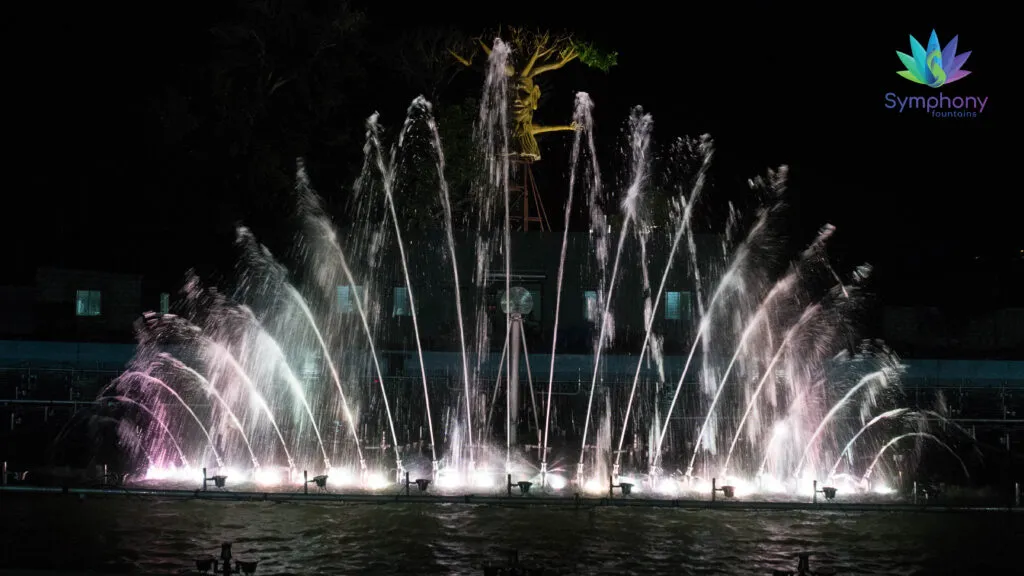
Fixed Fountain Installation | Fixed fountain installation covers pond and basin fountains where the hydraulic equipment is installed within a permanent water-filled basin. Our fixed fountain installation scope includes civil coordination with the site’s civil contractor to confirm basin construction, drain, overflow, and equipment vault are complete and ready for hydraulic installation; assembly and connection of the nozzle header pipework within the basin; pump installation and connection within the equipment vault or pump room; underwater LED lighting fixture mounting and cable connection; control panel installation, power connection, and equipment wiring; basin fill, hydraulic system testing, and leak verification; pump commissioning and variable frequency drive setup; nozzle flow rate balancing to achieve uniform jet heights across the installation; LED lighting commissioning and DMX address programming; and full system performance test running the fountain through all show modes before handover. |
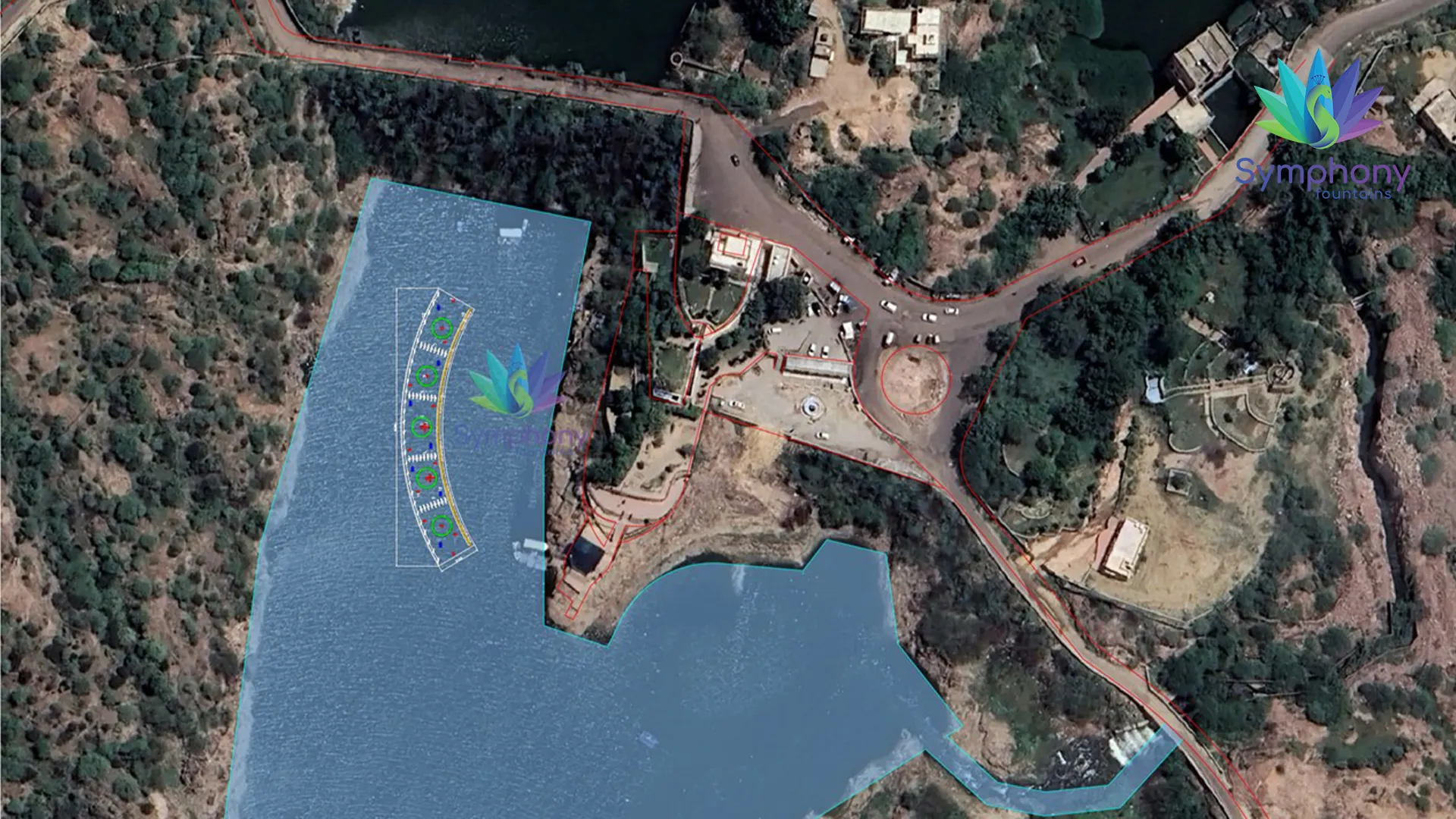
Floating Fountain Installation | Floating fountain installation covers fountain systems mounted on buoyant platform assemblies deployed on lakes, ponds, reservoirs, and ornamental water bodies. Our floating fountain installation scope includes site preparation including mooring anchor installation at the specified positions within the water body; platform deployment onto the water surface using appropriate equipment for the water body size and bank access conditions; mooring cable or chain connection between the platform anchors and the float assembly; electrical supply cable deployment from the bank supply point to the float, including underwater cable routing with appropriate burial or protection where required; electrical connection of the pump, nozzle solenoids, and LED lighting to the float-mounted junction box; electrical supply connection at the bank panel; hydraulic commissioning including pump start-up, nozzle performance testing, and jet height verification; LED lighting commissioning; and full system performance test before handover. |
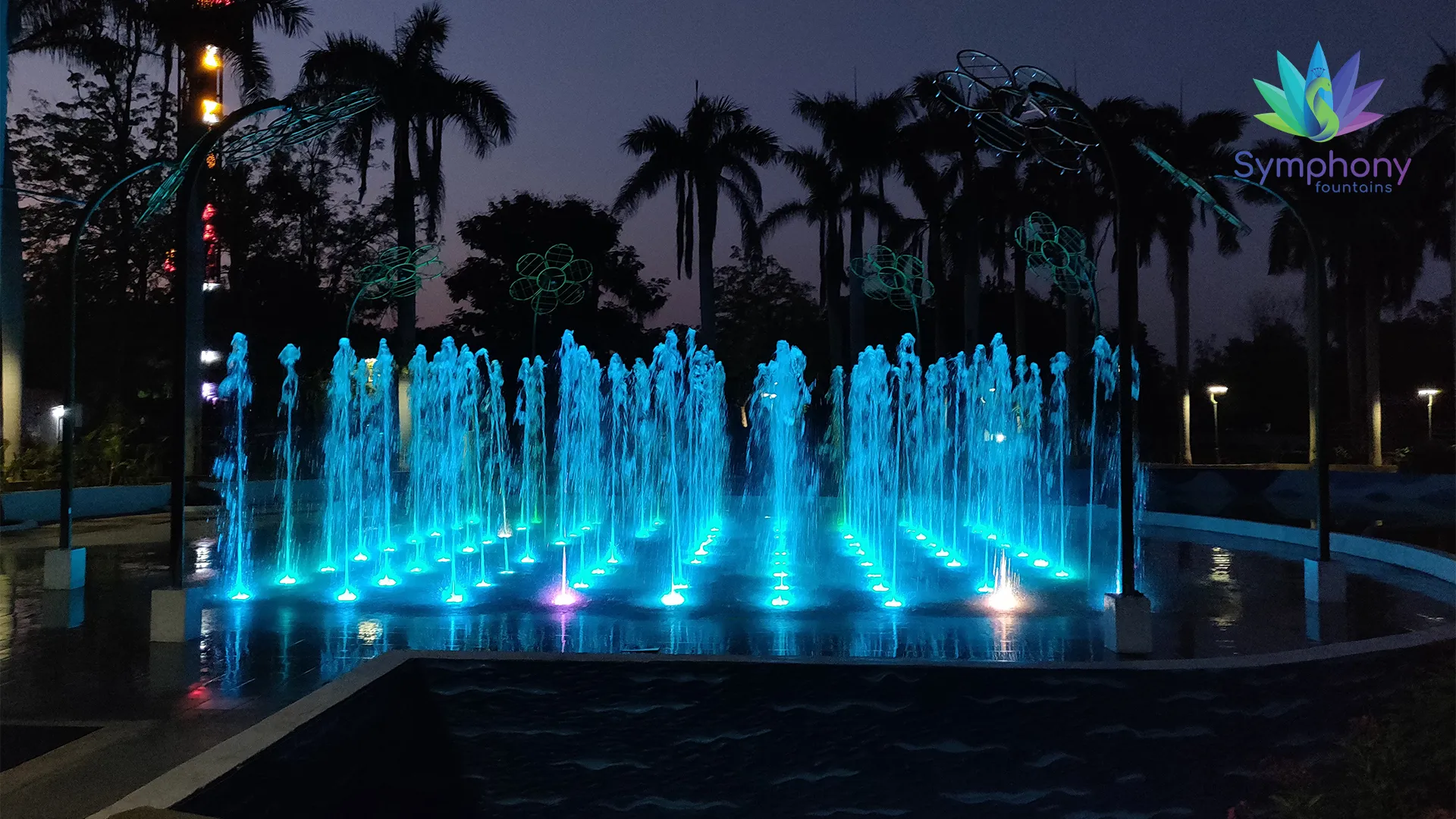
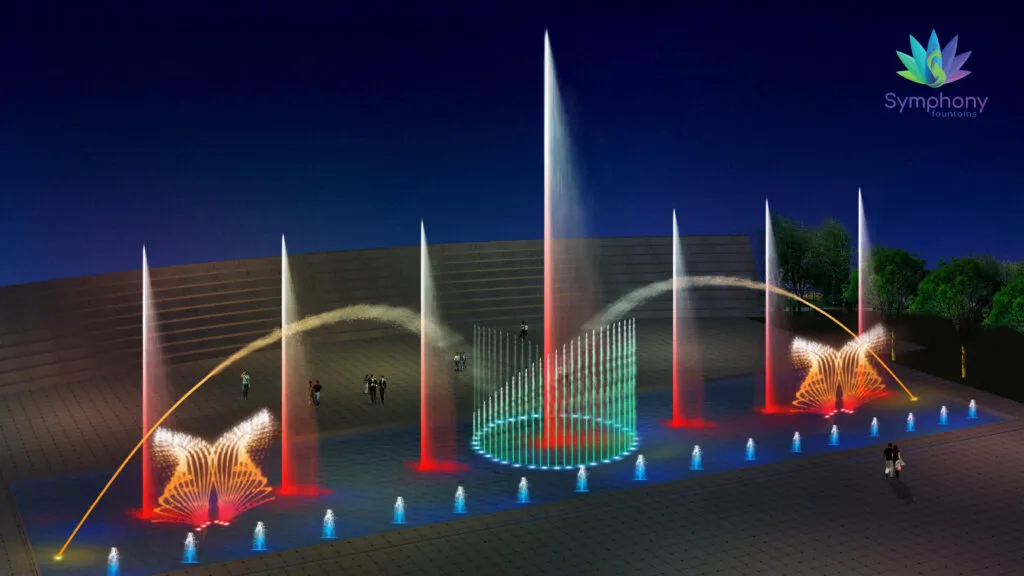
Dry Deck Fountain Installation | Dry deck fountain installation covers fountain systems installed flush with a paved surface, with no raised basin visible when the fountain is inactive. Dry deck installation requires particularly precise coordination with the civil contractor because the nozzle sleeves must be set at exactly the right height relative to the finished paving surface before the paving is laid, and the underground collection tank and pipe network must be installed before the base slab is poured. Our dry deck installation scope includes coordination with the civil contractor on nozzle sleeve setting and collection tank installation; nozzle sleeve installation at the specified surface positions with correct height setting; underground collection tank commissioning including pump installation, float switch setup, and drainage connection; pipe network connection from the pump to each nozzle sleeve position; nozzle installation within the sleeves at the correct height above the finished paving level; control panel installation and electrical connection; sensor system installation for interactive dry deck fountains including sensor mounting, cabling, and control system integration; hydraulic commissioning; and full system performance test with water flowing through all nozzle positions and any interactive sensors verified as functioning correctly. |
Our installation process follows seven stages from pre-installation site check through to performance verification and handover. The process applies to all fountain types, with specific procedures for fixed, floating, and dry deck installations at each stage.
Stage | What Happens |
Stage 1 Pre-Installation Site Check | Before the installation team mobilises to site, we conduct a pre-installation check to confirm the civil works are complete and ready for fountain installation. We verify that the basin or dry deck surface construction is structurally complete, the equipment vault and pump room are accessible and correctly dimensioned, the electrical supply is available at the correct voltage and capacity at the panel position, conduits and cable routes are clear and correctly positioned, and the water supply and drainage connections are functional. Any deficiencies identified at the pre-installation check are documented and communicated to the civil contractor before the installation team mobilises, preventing delays caused by incomplete civil works. |
Stage 2 Equipment Receipt and Inspection | On arrival at site, all manufactured components including pipe assemblies, control panel, nozzles, pumps, and LED fixtures are inspected against the project packing list and delivery documentation. Any transit damage is documented and reported. Components are checked for completeness before installation begins. The approved layout drawings are reviewed with the installation team to confirm everyone understands the installation sequence and the position of every component. |
Stage 3 Hydraulic System Installation | The pipe network and nozzle header assemblies are installed within the basin or underground vault following the approved layout drawings. Pump units are installed within the equipment vault or pump room and connected to the pipe network. Isolation valves and balancing valves are installed at the specified positions. All hydraulic joints are made to the specified connection method and inspected before the system is filled. For dry deck installations, nozzle sleeves are verified at the correct height before paving is laid, and the underground collection tank and pump are commissioned. |
Stage 4 Electrical and Control System Installation | The control panel is installed at the specified location and connected to the power supply. Underwater LED lighting fixtures are mounted at the specified positions within the basin and their cables are routed to the control panel through the specified conduit routes. Pump power cables are connected between the panel and the pump terminals. Audio system components are installed and connected. For floating fountains, the electrical supply cable is routed from the bank panel to the float junction box and all connections are made and weatherproofed. |
Stage 5 Hydraulic Commissioning | The basin is filled and the hydraulic system is pressure-tested for leaks. Pumps are started and their operating parameters including flow rate and pressure are verified against the design specification. Variable frequency drives are configured for the correct pump speed range. Nozzle flow rates are balanced across all circuits using the balancing valves to achieve the specified jet height uniformity. Any nozzle performance issues are investigated and resolved before proceeding to electrical commissioning. |
Stage 6 Electrical and Show System Commissioning | LED lighting fixtures are addressed and tested. The DMX lighting control system is configured and all fixtures are verified as responding correctly to control signals. The audio system is tested for correct playback and volume calibration. The show control system is loaded with the fountain’s show programme and tested by running all show sequences. For interactive dry deck fountains, sensor systems are tested to confirm correct triggering of water patterns in response to visitor presence. |
Stage 7 Performance Verification and Handover | We conduct a complete performance verification run of the fountain through all programmed show modes with the client present. All nozzle patterns, lighting effects, and audio synchronisation are demonstrated and verified against the approved design specification. Any adjustments required to achieve specification compliance are made before handover. We issue the installation completion documentation including as-installed drawings, commissioning test records, and the operations and maintenance handover pack. The fountain is formally handed over to the client operating team, and operations training is conducted as the first activity following handover. |
Fountain installation requires close coordination with the project’s civil contractor because the civil works and the fountain installation are interdependent: the civil contractor must build the basin, vault, conduits, and surface paving to the dimensions and positions specified in the fountain layout and civil drawings, and Symphony Fountains can only install the fountain system correctly once the civil works are complete to specification.
The installation team knows the equipment: Symphony Fountains’ installation teams install equipment they have seen manufactured and tested in our own facility. They know the specific assembly sequence, the correct torque settings for all connections, the common installation pitfalls for each component type, and the performance parameters to expect during commissioning. A third-party installation contractor working from a set of drawings and a packing list has none of this embedded knowledge and will inevitably encounter situations that require manufacturer technical support to resolve, adding time and cost to the installation programme.
Single responsibility from design to commissioning: When Symphony Fountains designs, manufactures, and installs the fountain, there is one organisation responsible for the performance of the complete system from the first day of operation. There are no gaps between design intent and manufacturing reality, no conflicts between what the manufacturer specified and what the installer interprets, and no contractual grey areas about who is responsible when something does not perform as expected. If the fountain does not perform to specification after installation, it is our responsibility to make it right.
Commissioning to design specification, not to ‘acceptable’: A third-party installer commissioning a fountain system has no obligation to achieve the jet height uniformity, lighting colour accuracy, and show synchronisation precision specified in the original design. Their obligation is to install the components in the positions shown on the drawings and leave the system in working order. Symphony Fountains’ installation teams commission to the design specification because they know what the design specification requires and because the performance of the completed installation reflects directly on our reputation as the manufacturer.
Continuity into maintenance and support: Clients who use Symphony Fountains for installation have access to our Annual Maintenance Contract service, which is operated by the same technical team that installed the system. The maintenance team knows the specific configuration of the installed system, the history of the installation, and any project-specific adjustments made during commissioning. This continuity produces better and faster maintenance outcomes than a new contractor starting from the documentation without installation experience on the specific system.
What does fountain installation involve?
Fountain installation involves assembling and connecting all mechanical, hydraulic, electrical, and control components of a fountain system within the civil infrastructure prepared by the site contractor. It covers hydraulic pipe and nozzle assembly, pump installation, underwater LED lighting installation, control panel connection, and commissioning of the complete system including hydraulic performance testing, nozzle balancing, lighting programming, audio setup, and show control verification. Symphony Fountains installs fixed basin fountains, floating fountains, and dry deck fountain systems using specialist installation teams.
What is a dry deck fountain and how is it installed?
A dry deck fountain is a fountain system installed flush with a paved surface with no raised basin. Nozzle sleeves are set into the paving at precise positions, and water jets emerge through these sleeves during operation and return to an underground collection tank for recirculation. Installation requires close coordination with the civil contractor because nozzle sleeve heights must be set correctly before the paving layer is laid. Symphony Fountains attends the nozzle sleeve setting stage to verify correct positions and heights before the paving is completed, as incorrect sleeve heights cannot be corrected once the paving is in place.
How long does fountain installation take?
Fountain installation timelines depend on the scale and complexity of the system. A compact decorative basin fountain may be installed and commissioned in two to four days. A medium-scale musical fountain with 20 to 50 nozzle positions typically requires one to two weeks for installation and commissioning. Large-scale public musical fountains with complex nozzle configurations, multiple pump circuits, and multimedia show systems may require three to six weeks. Dry deck fountain installations in occupied public spaces may take longer due to the need for phased access and surface restoration. Symphony Fountains provides a confirmed installation programme at the project planning stage.
Does Symphony Fountains install fountains outside its home market?
Yes. Symphony Fountains’ installation teams are available for projects both domestically and internationally. For international projects, we coordinate closely with local civil contractors and electricians who handle the civil infrastructure and power supply, while our team handles the specialist fountain hydraulic and control system installation. We provide all installation documentation in advance to allow local contractors to prepare the civil works correctly before our team mobilises.
What civil works need to be completed before fountain installation can begin?
Before Symphony Fountains’ installation team can begin fountain system installation, the civil works must be structurally complete. For fixed basin fountains this means the basin is watertight, the equipment vault or pump room is accessible and correctly dimensioned, electrical conduits are in place, the power supply is available at the panel location, and the water supply connection is functional. For dry deck fountains, the underground collection tank is installed, nozzle sleeves are set at the correct heights, and electrical conduits are in place. For floating fountains, the bank mooring anchor points are installed and the electrical supply is available at the bank panel location.
What is included in fountain commissioning?
Fountain commissioning is the process of setting up and testing every component of the installed fountain system to verify it performs to the design specification. It includes filling the basin and testing the hydraulic system for leaks, starting the pumps and verifying flow rates and pressures, configuring variable frequency drives, balancing nozzle flow rates across all circuits, addressing and testing the LED lighting system, configuring the DMX lighting controller, testing the audio system, loading and testing the show programme, running all show sequences to verify water choreography and lighting synchronisation, and completing a full performance demonstration with the client before formal handover.

Flowing Innovation: Design, Install, Program – We Make Fountains Come Alive!
Copyright © 2026 Symphony Fountain., All Rights Reserved.
Design and SEO by V2M Digital